|
A MATTER OF SCALE:
"It takes a lot of imagination to be a good
photographer. You need less imagination to be a painter, because you can
invent things. But in photography everything is so ordinary; it takes a
lot of looking before you learn to see the ordinary.
- David Bailey -
Alfred Stieglitz was once asked:
"how does a photographer learn?" He answered without even a second’s
hesitation: "By looking".
There is no question that photography is the art of observation. While great landscape images are more than just the sum of composition, value, and light, they all capture a unique vision of place. To find that vision often takes time and patience--in the world of film, my best shot is usually # 36, or, in a generous role of Velvia, # 37. Once, shooting bighorn sheep, my best shot was the last image on a borrowed roll of film. (No, I did not give it back.)
The common technique for landscape is that we see a composition, light, color; the "on" switch triggers in our brain. We reach for the appropriate lens, shoot sufficient frames to capture whatever triggered the flow of adreneline, serotonin, and endorphins, and we're done.
But hold on. Sit for a minute and consider what photographers might learn from the way geologists see a landscape. Geologists examine and explore the earth at multiple scales
– from the very small -- chemical compounds and isotopes to the very grand --
planetary geology. Astronomers take the scale thing to the galactic and beyond. The point is that the landscape, and its understanding occurs at all scales. And all of them help tell the stories of landscape that we capture in images.
Like field geologists, photographers have easy
access to three scales:
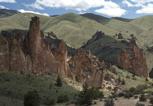
“LANDSCAPE: This scale
is where most "landscape photographers" spend most of their visual time. Landscape takes in the entire vista before you. Are there sharp peaks or flat mesas? Linear or aligned features?
Large-scale strata? It's the shot with all the mountains in it, or the lake or the river with mountains behind. It tells geologists about regional relations. Is there a fault scarp that extends for miles? It that a range of volcanoes or a single peak?
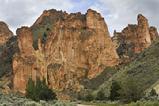
OUTCROP: This is about rock faces. It's the scale that most human or animal portraiture occurs. For geologists, it's about outcrops and features nearby—the place
you are investigating/sitting/standing. Usually the area within tens of feet
from you. What features do you see? Bedding or layering? Color? Columnar
joints? Faults? For "geological portraiture" outcrop scale-or the landscape about 10 to a few hundred feet away, reveals patterns and is often a good scale for finding abstractions.
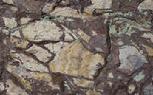
HAND SAMPLE: Finally, for geologists there's "hand sample"--that you see at arms-length or closer. For geologists, this often means whacking a piece of rock off the outcrop, or examining a sample that you can hold in your
hand—or just get up close to the rocks.
At this scale you should see the details of the rock: vesicles, clasts,
fossils, etc. and using a hand-lens is encouraged. For photographers, this is generally macro scale.
In geology, these
three scales combine to provide a more complete understanding of terrestrial
features and processes. Applying this same strategy to shooting images can make for a richer experience, and a more diverse portfolio. So, a suggestion. Take time to get closer to the landscape. Shoot your subject on multiple scales. put away the wide angle and get out the macro. Alternatively, understand that the reason foreground is so important is that it often provides the hand-sample scale. A foreground of flowers is great if you are shooting a flowery field. It's pretty, but not so informative if your subject is a mountain range of crags and granite. Here, a foreground that informs about the kind of rocks the mountains are made of might be more appropriate.
Intergrate information and composition over all three scales in images, and you'll be telling a more complete visual tale.
|